

Savoy Lecture
featuring Keynote Interview and Panel Discussion
The Arena Savoy Lecture has been the centrepiece of Arena’s event calendar for over 30 years showcasing both UK and global senior industry leaders as its speakers and this year will certainly be no exception.
Attendee List
Event Review
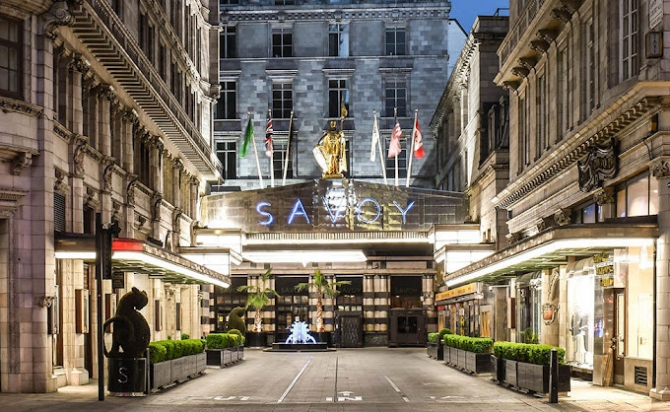
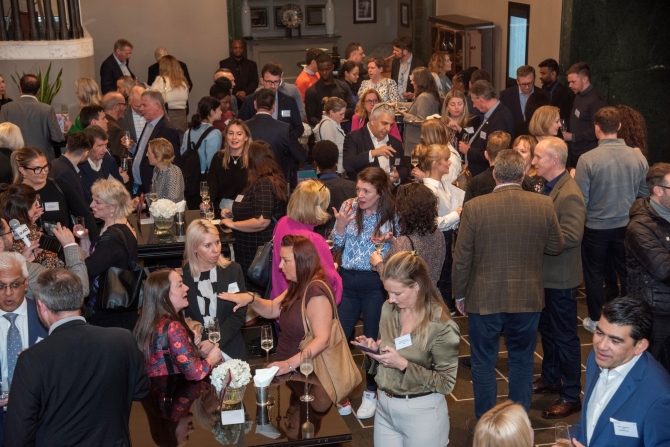
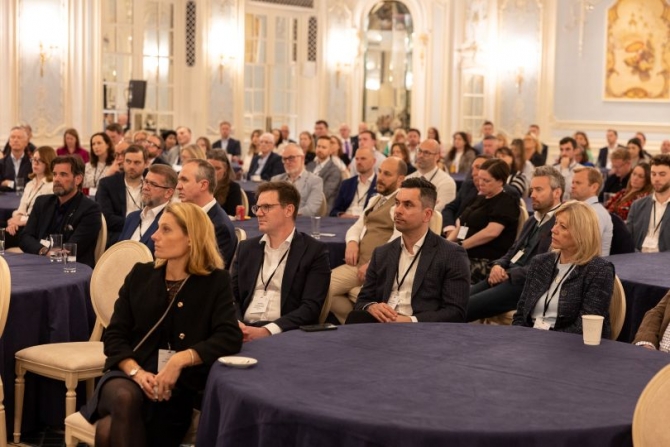
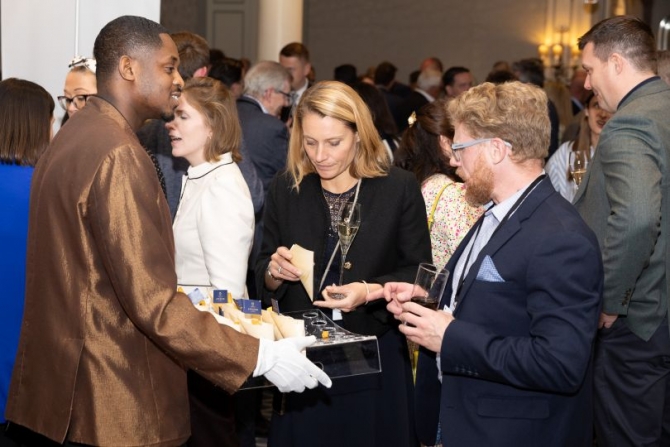
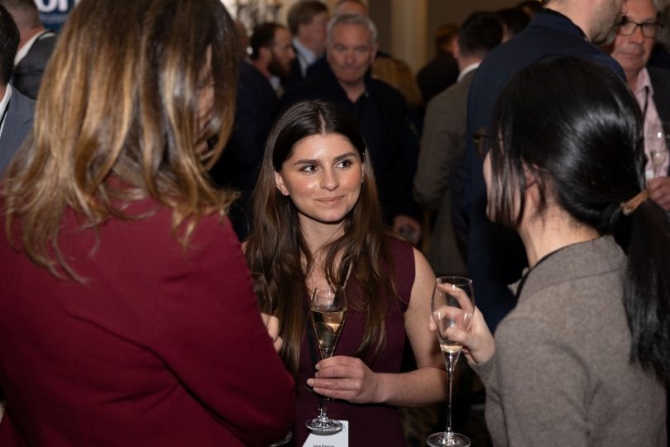
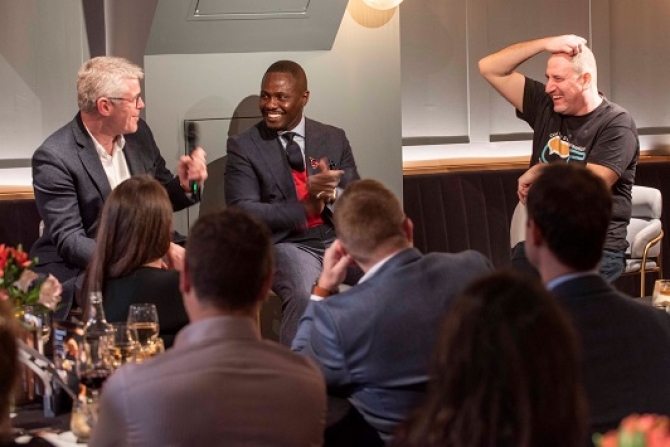
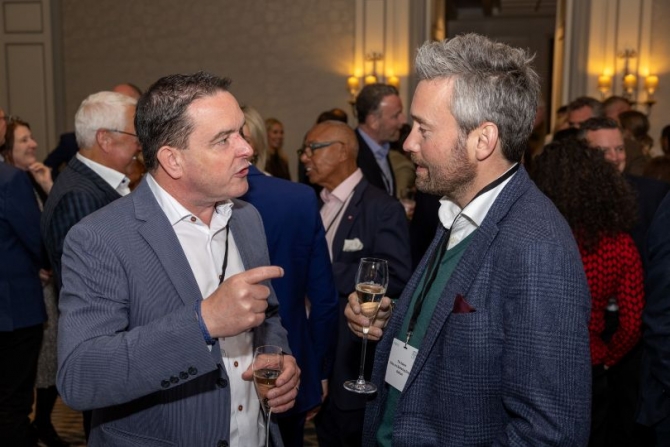
This week saw the welcome return of Arena's centrepiece Savoy Lecture; set against the backdrop of myriad challenges for hospitality, this seemed the perfect time for over 200 senior leaders to come together to discuss the road ahead and how it might be collectively navigated.
The sold-out event didn't disappoint, with notes of cautious optimism peppering the pragmatic and always insightful discourse. The evening also gave rise to a new mantra: 'lean in, breathe out' - a brilliantly pitched piece of advice from UKHospitality CEO, Kate Nicholls OBE. One that we will be shamelessly dining out on for the rest of the year.
Navigating the Noise
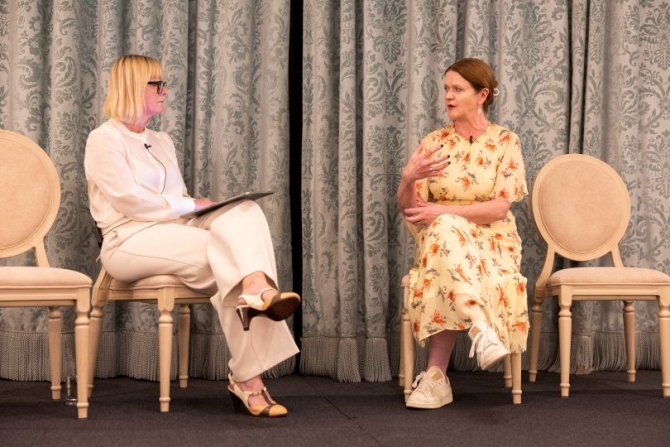
There is no shortage of people willing to describe the state of hospitality right now. Finding someone who can affect real, meaningful change is a harder task. Kate Nicholls OBE, interviewed by Jill Livesey, Founder of Aqua Strategies, is very much in the latter camp.
She opened by taking the long view on an industry that has navigated Brexit, a pandemic, an energy crisis, a cost-of-living squeeze and, most recently, the tremors emanating from Trump's tenure across the Atlantic. "It's not like we haven't been here before," she said, with the composure of someone who has sat across the table from enough chancellors to know that panic is rarely a productive policy position.
The caveat is an important one. This crisis is different in kind, not just in degree. Where previous emergencies typically hit supply or demand, today's landscape is hitting both simultaneously. With 300 pubs, bars and restaurants closing every week, these are not merely statistics. They are a stark reminder of why we were in the room.
Getting to the Top Table
Her approach to Government is disarmingly straightforward: arrive with facts, frame them in the language of the people you're talking to and never stop knocking on doors. "The politicians, even more than the supermarkets, come to hospitality to see what's happening on the high street," she said. "To see what's happening to voters." When she sits down with ministers, she speaks on behalf of the whole supply chain. "It's all an ecosystem," she said, "and we need to make sure that we're leaning into the health of every single bit of that."
On VAT, the logic is almost embarrassingly simple: cut it on day one, consumers spend it in hospitality on day two, a new job is created by day three. "If you put money in our customers' pockets, they'll come and spend it with us." On the tourism tax, layer a 5% levy on top of existing VAT and you have an effective 27% sales tax on a family holiday (the 5% is also subject to VAT). A postcard campaign over Easter generated 25,000 responses to MPs in a single weekend. The message was stark; "When the tax is more than the cost of a Sun holiday," Kate said, "you know something has gone wrong."
NI Changes: A Human Cost
The government's National Insurance changes have resulted in the direct loss of 120,000 jobs in the sector. Youth employment in hospitality has fallen from 42% to 6%. "We are the most socially productive sector," she said, with a quiet fury that needed no amplification. "And the government is just hollowing us out." Hospitality has historically been the sector most willing to take people furthest from the jobs market and give them something real. Not a subsidy. A job, a career, a ladder. "We could stand on our head and do it," she said. "But you've just taxed the tools out of existence."
She inherited UKHospitality with 50 members. Today it has grown to 750. The industry has, in her, precisely the advocate it needs.
Next came a panel discussion with Kate joined by Matt Thomas, CEO of Restaurant Associates Group, Angus Brydon, Managing Director of BM Caterers, and Andrew Selley, Chief Executive of Bidcorp UK.
Supply Chain and Innovation
For Andrew Selley, Covid was the inflection point that unlocked honest conversations the industry had been edging towards for years. Protein substitutions, portion sizing, product swaps: sensible, collaborative responses rather than admissions of defeat. "We have far more grown-up conversations now," he said, "about how we can work together, from the farm to the fork." His advice: plan for an extended period of elevated costs rather than waiting for a return to pre-2022 normality.
On innovation, Angus Brydon didn't hesitate. "More important than ever." Matt Thomas offered the sharpest unpacking: innovation can become a cover for change for its own sake, when what consumers often want is consistency done well. "We might eat the same thing for lunch most days. What we need is for it to be consistently excellent." On AI, the panel was united: use it to free people from administrative burden and put them back in front of the customer. "We want the amazing technology doing the back-of-house stuff," said Brydon, "and our people doing what they're brilliant at." A sentiment echoed by Selley, who’s sales team is armed with AI enabled insights and personalised offers to leverage data into more sales.
The Consumer in 2026
The average workplace diner now has just fifteen minutes for lunch. The post- pandemic consumer returning to the office is time-poor, health-conscious and value-driven. Chief among the emerging influences is the rise of GLP-1 weight loss medications, with almost 20% of the UK population now eligible for treatment and current take up at around 6%. Smaller plates and protein-dense menus are, as Selley put it, the new vegetarianism. "We changed our menus when 7 to 8% of the customer base was vegan and vegetarian. We're already nearly at that proportion with GLP-1 users, and it's growing." It is, as Kate noted dryly, yet another variable for an industry that has rather cornered the market in variables.
Resilience: The Long Game
Angus Brydon's closing counsel: don't go it alone. "I have never met anyone in this sector who wouldn't say yes to helping." And look after your own resilience first. Kate Nicholls offered the perspective of someone who has navigated more of these storms than most. “Lean in, breathe out”, namely, listen, learn, follow the data, and steel yourself for the marathon ahead.
There is something quietly remarkable about a room full of people absorbing a cost-of-living crisis, a recruitment emergency, a regulatory onslaught and the ripple effects of GLP-1 drugs reshaping the nation's appetite, who are, by and large, still standing. Still innovating. Still, in their more candid moments, rather enjoying it.
Battered, as ever. Not remotely beaten.
Huge thank you to Nick Clancy, Managing Partner - Foodservice, Jellybean for this event review.