

Behind the Scenes
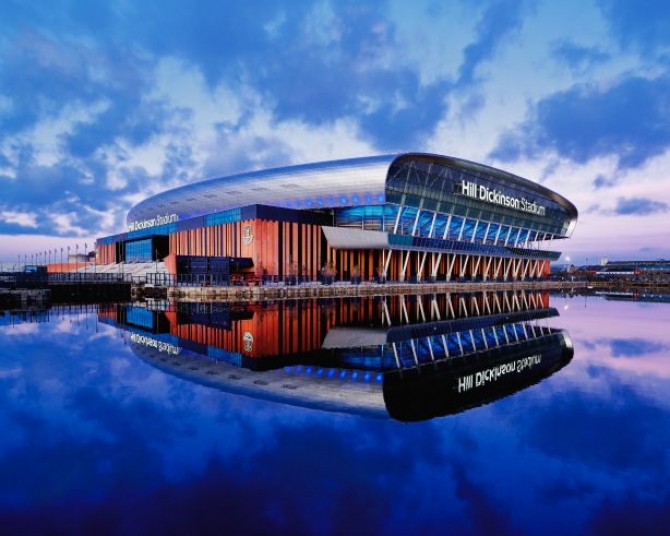
Everton FC's Hill Dickinson Stadium, Liverpool
Arena’s exclusive ‘Behind the Scenes’ event took place at the new home of Everton Football Club’s Hill Dickinson Stadium in Liverpool on Monday 21 September 2026. You can read the event review below, kindly written by Fiona Hamilton, Director of Strategic Growth, William Murray PR & Marketing.


Attendee List
Event Review
Arena’s Behind the Scenes event at Everton Football Club’s Hill Dickinson Stadium brought together hospitality and foodservice leaders for an inside look at how Aramark UK has created a new culinary and hospitality experience at one of the Premier League’s newest stadiums. The event, on Monday 21 September, offered a fascinating glimpse of the thinking, people, food, technology and operational complexity behind the venue’s first season.
Opened in August 2025, the stadium is Everton’s new home and Aramark UK’s first Premier League club partnership. As Official Culinary Experience Partner, Aramark is responsible for delivering a 365-day hospitality operation capable of serving up to 52,769 fans on matchdays.
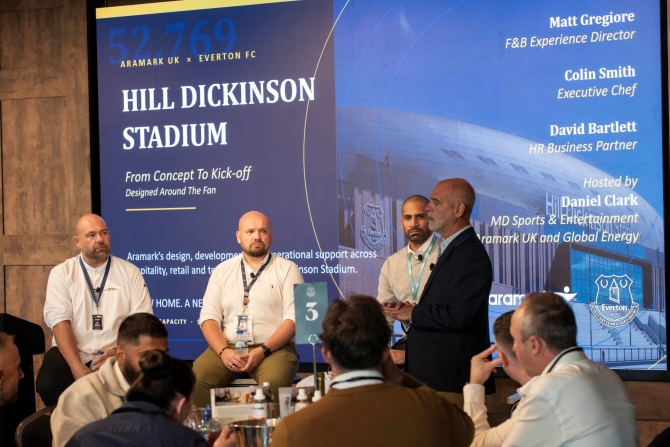
The keynote interview, hosted by Daniel Clark, managing director, sports & entertainment, Aramark UK, featured Matthew Gregoire, food, beverage & experience director, Aramark UK, Colin Smith, Executive Chef, Hill Dickinson Stadium and David Bartlett, HR Director.
The conversation lifted the curtain on the stadium’s culinary operation - from the insights behind its restaurant concepts and menus to the scale of the workforce, the role of technology and the challenge of creating a distinctive hospitality experience within a brand-new venue.
Building a hospitality proposition from the ground up
For Matthew Gregoire, the scale of the challenge became clear before the stadium had even opened.
“When I came onto this contract back in 2024, I literally did get handed over technical drawings and told, ‘run away with it and build this’.”
The team had to translate those drawings into a functioning hospitality operation, working through what each space could become and how the different propositions could work together.
The result is deliberately different from a conventional stadium catering model. There are 14 restaurants, three GA+ bars, approximately 5,500 hospitality covers and around 48,000 general admission spaces.
The ambition was to give supporters different experiences, price points and reasons to engage with the stadium.
The hospitality offer ranges from More, an executive-level seven-course fine-dining restaurant, through to more accessible propositions such as Trinity. Other concepts take inspiration from familiar high-street restaurants: Navigator has a Savoy Grill influence, while Domingo’s draws on the likes of Hawksmoor and Gaucho.
Giving every restaurant its own identity
The differentiation continues into the food. Adam explained that the team moved away from the traditional stadium approach of creating a limited number of menus and replicating them throughout the venue.
Instead, they developed around 17 different menus, with multiple rotations designed around different kick-off times and occasions.
That creates a significant operational challenge. The food needs to feel distinctive to each restaurant while remaining deliverable at scale.
Merchants, for example, brings together North African, Spanish, Italian and Mediterranean influences. Blue Line takes a pan-Asian direction, but with enough familiar choices to ensure the concept remains approachable.
That balance is deliberate with the aim of creating a proposition with personality while giving people confidence that they will find something they want to eat.
For season-ticket holders, variety is built into the experience, too. Rather than being locked into one restaurant, members can move between concepts during the season. That means the hospitality proposition itself becomes part of the reason to keep coming back.
Putting Everton into the food
One of the most distinctive aspects of the culinary strategy is the way the club itself is being built into the offer.
Adam described how dishes at Beyond can be linked to current and former players and their preferences, creating food with a story attached to it.
The team has also embraced a more playful approach to innovation, such as a doughnut designed to look like a hot dog, complete with chocolate versions of ketchup, mustard and other traditional toppings. Other products have been developed around specific fixtures, giving the food offer the ability to respond to the teams and events coming into the stadium.
The people behind the experience
Creating 14 restaurant concepts is one challenge. Delivering them consistently to thousands of customers at the same time is another.
The operation requires around 160 chefs and 2,200 people across matchdays and non-matchdays. Recruitment was deliberately connected to the local community, with the team working alongside the Job Centre, Back to Work and Liverpool FC.
For the first three months, assessment centres were being held three times a week as the workforce was built. The operational complexity even extends to uniforms: there are 19 different uniforms across the stadium, reflecting the different restaurants, retail concepts and e-bars.
Following the first season, around 1,700 of the 2,200 employees indicated that they wanted to return, giving the team a significant base of staff to build from.
Technology designed around the customer
Technology is another important part of the stadium’s approach to improving the experience. There are four Just Walk Out stores across two levels, alongside 20 e-bars across seven locations.
The Just Walk Out system allows fans to tap their card on entry, select what they want and leave without using a traditional till. The average journey from entry to exit is around eight seconds.
The technology is designed to deliver two benefits simultaneously: speed of service for the customer and increased capacity to serve customers. But the team also acknowledged that technology adoption takes time.
The experience highlights an important part of any technology investment: the technology itself may be sophisticated, but the customer experience has to feel simple.
What do football fans actually want?
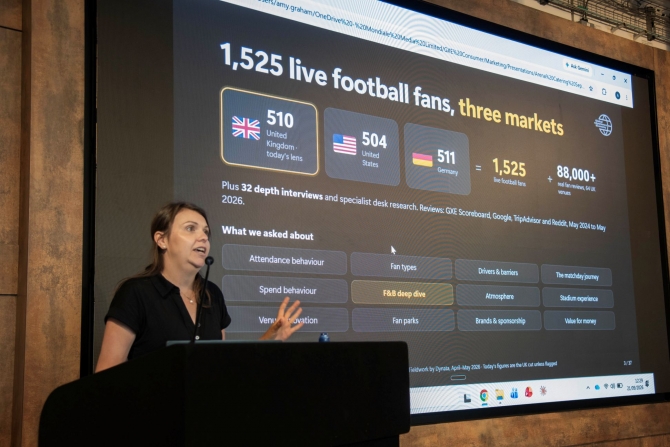
To give the audience wider context, Amy Graham, head of consumer insights, GXE Consumer, explored what football fans themselves want from the matchday food and drink experience.
Her presentation provided the insight behind many of the choices being made at Hill Dickinson Stadium, looking at where fans spend, what frustrates them and what would encourage them to change their behaviour.
The research found that food and drink represents the biggest commercial opportunity in the matchday experience beyond the ticket. And fans are signalling a willingness to spend more - if it’s reflective of the experience.
More than half of UK fans surveyed - 56% - said they would arrive earlier at the stadium if there were better food and drink options. A further 52% said they would stay later, while 66% would pay more for better quality.
Using an average willingness to pay around 15% more, GXE calculated that this could equate to approximately £2 extra per fan per match. And in a 40,000-capacity stadium, that represents around £80,000 additional revenue per game.
Across 19 home Premier League matches, that could equate to approximately £1.5m - and while that’s a theoretical figure, the point remains that customers are willing to spend more when they have good reason to.
GXE analysed around 88,000 reviews across 64 UK stadiums to understand what drives negative experiences. The biggest barriers are surprisingly basic operational measures: cold, undercooked or bland food, small portions and queues.
Therefore, the opportunity lies in getting the fundamental right, before creating elaborate food concepts.
There’s also a question of perceived value and fairness. Fans remember prices in extraordinary detail, particularly the price of a pint. Value goes beyond a number on a menu – the time and effort required to get the product matter, too. For example, a customer waiting 50 minutes for an expensive item that arrives poorly prepared is making a very different judgement about value from someone who receives a high-quality product quickly.
Seven opportunities to change the matchday
The research identified seven areas where operators can create a stronger food and drink proposition:
Ritual: replicating behaviours fans already enjoy, such as the pre-match pub visit.
Heritage: creating food connected to the club, its history and its sense of place.
Families: providing better choices and reassurance for family groups.
Fan zones: creating spaces where customers are more willing to explore and trade up.
Pre-purchase: selling food and drink before fans even arrive at the stadium.
Speed: recognising that customers will pay for faster service.
Hot drinks: particularly relevant in the UK, where one in three fans want better coffee and hot drinks.
If you are interested in the slides presented, you can click this link and you will then be sent a PDF report - http://www.gxeconsumer.com/beyond-the-ticket
Several of the themes are in play at Hill Dickinson Stadium. The restaurant concepts, for example, create ritual and choice, while player-linked dishes build heritage. Just Walk Out addresses speed and fixture-specific food creates novelty and relevance. Meanwhile, the wider hospitality proposition creates more reasons to spend time in the stadium beyond the duration of a match.
While the building may be new, the challenge is a familiar one: creating an experience that customers value enough to make it part of their day, rather than simply something they have to navigate around the main event.
A trip behind the scenes
Of course the day featured an exclusive tour of the stadium kitchens, providing a first-hand look at the operational infrastructure behind the culinary offer and the scale required to deliver hospitality across the venue.
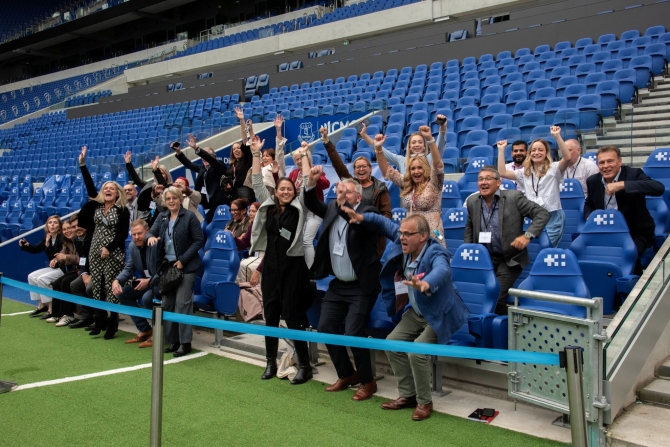
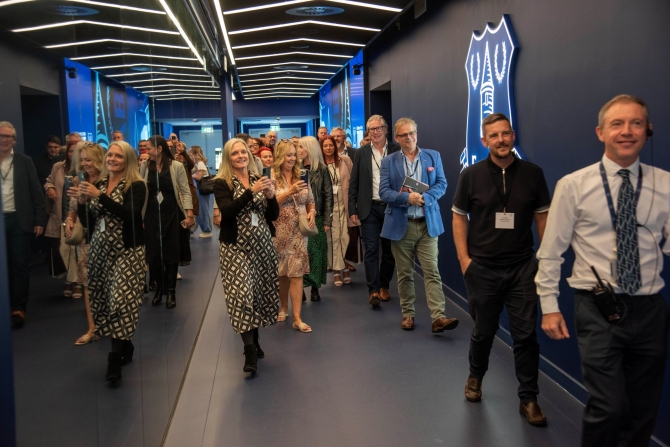
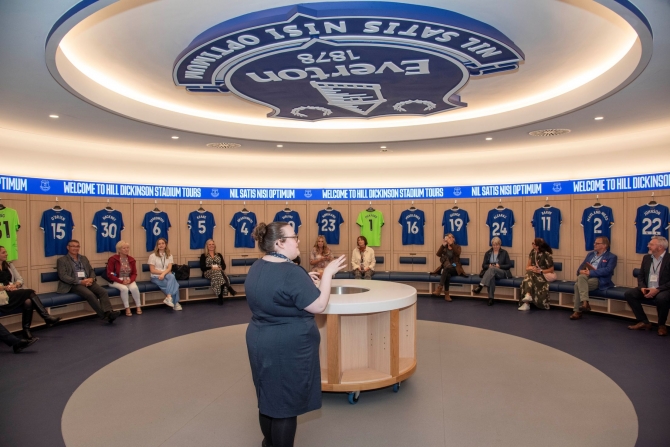
We ended with a behind-the-scenes tunnel tour, taking guests into the areas normally reserved for players and matchday operations and offering another perspective on the scale and ambition of Everton’s new home.
A football match may only last 90 minutes, but the ambition is to make the experience around it last much longer.
A big thank you to Fiona Hamilton, Director of Strategic Growth at William Murray PR & Marketing for this review.